Pressure-Treated Pine
$15–$25/sqftLifespan: 15–20 yrs
Pros
- + Lowest upfront cost
- + Widely available
- + Easy to work with
Cons
- − Requires staining every 2–3 years
- − Can warp and crack
- − 15–20 year lifespan
Every common decking material — installed cost, lifespan, pros, cons, and which one's right for your build.
Lifespan: 15–20 yrs
Lifespan: 15–25 yrs
Lifespan: 20–30 yrs
Lifespan: 25–30 yrs
Lifespan: 30+ yrs
Lifespan: 30+ yrs
Lifespan: 30–50 yrs
Every decking material is a trade between what you pay now and what you pay later, and the only variable that settles it is how long you intend to own the deck. Pressure-treated pine is the cheapest thing you can build and the most expensive thing to keep: cleaning and a fresh finish every two to three years, and boards to replace from around year ten. Composite is roughly double the installed price and then asks for an annual wash and nothing else. Somewhere between eight and twelve years of ownership, those two lines cross. Put your own numbers through the composite versus wood calculator to see where yours does.
The second variable is what the deck has to look like. Cedar and redwood have a grain and a colour that no composite matches convincingly when new, and they are the right answer on a period house or anywhere the deck is a visible part of the architecture. The catch is that they only look that way while the finish holds; a neglected cedar deck greys and erodes faster than pressure-treated pine does.
The figures on the cards above are installed costs — framing, fasteners and labour as well as the boards themselves. That matters when comparing against a supplier's board price, which is typically a third to a half of the installed figure. It also explains why upgrading material costs less overall than the sticker difference suggests: the framing, the footings and most of the labour are identical whatever goes on top.
Two material choices do change the framing. Nearly every composite and PVC brand requires joists at 16 inches on centre, and 12 inches for diagonal layouts, where 2x wood decking is permitted at 24. And tropical hardwood is dense enough that every fastening has to be pre-drilled, which adds real hours. The joist spacing calculator works out what your chosen material requires.
Wood needs cleaning once a year and refinishing on a cycle set by the product rather than the calendar — clear repellents annually, semi-transparent stain every two to three years, solid stain every three to five. Composite needs the annual clean and no finish. It does not need nothing: composite grows the same surface mould as wood in shade, and the board gaps still pack with debris that holds water against the frame below.
The frame is the part nobody budgets for. Whatever the surface, the joists, beam, posts and ledger are pressure-treated lumber, and they fail in a predictable order — ledger first where water gets behind unflashed boards, then post bases in ground contact, then joist tops under packed board gaps. The maintenance schedule covers the twenty-minute annual check that catches all three.
There is no single best, only a best for a given budget and ownership horizon. Pressure-treated pine is the cheapest to build and the most expensive to keep. Composite costs roughly twice as much installed and asks for almost nothing afterwards. Cedar sits in between and looks better than either while it is fresh. If you will own the house more than about a decade, composite usually wins on total cost; under that, wood does.
PVC and tropical hardwood, at 30 years or more, followed by composite at 25 to 30. But every one of those sits on a pressure-treated frame with an ordinary wood lifespan, so the surface material sets the ceiling, not the floor. A 30-year deck surface over a 15-year-old frame will outlive the thing holding it up.
Over a long enough period, usually. Composite costs roughly twice pressure-treated pine installed but removes the cleaning-and-staining cycle that a wood deck needs every two to three years, and the board replacement that starts around year ten. Run it over the years you actually intend to own the deck with the comparison calculator — the crossover is commonly somewhere between eight and twelve years.
Noticeably hotter than wood, and dark colours worst of all. It is the single most common complaint from owners who did not expect it. Lighter colours help, shade over part of the deck helps more, and capped products that reflect more heat help most. If the deck faces full afternoon sun and people will be barefoot, get a sample board and leave it outside before choosing a colour.
Yes, and a picture-frame border in a contrasting colour is the most common version. The one thing to check is movement: composite and PVC expand with heat considerably more than wood does, so a border in one material around a field in another needs a gap sized for the larger of the two. Framing stays pressure-treated lumber whatever the surface is.
As an Amazon Associate I earn from qualifying purchases.

CAMO EDGEClip Universal Hidden Deck Fastener Clip (900 ct) | (0344356), 305 Stainless Gusset and Screw, Clip Creates 3/16 in (4.7 mm) Spacing, For Use With Composite Decking Boards
$349.40
Check price on Amazon
LIONMAX Lag Screws 6 Inch, Structural Wood Screws #14 x 6, 50-PCS, Black | Heavy Duty Timber Screws 6 Inch, Rust Resistant for Exterior Wood/Log/Deck/Construction, Washer Head, T30 Star Drive with Bit
Save 5%
$18.71Typical price:: $19.70

50 Pack 2x10 Joist Hangers, 18 Gauge Galvanized Face Mount | Wood connectors for rafters, beams and framing projects; suitable for decks, floors and pergolas.
$74.99
Check price on Amazon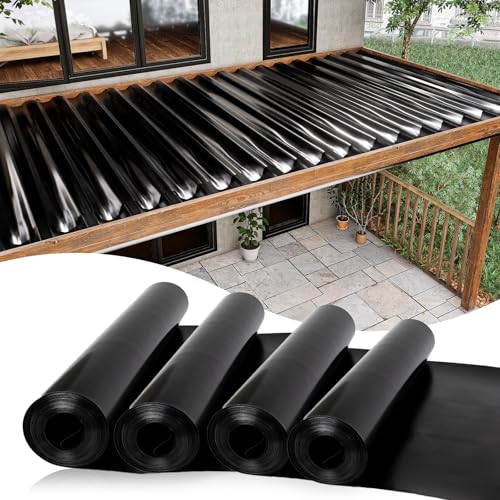
Muzata 4P 50ft Black HDPE Under Deck Drainage System,16" Joist Spacing M081 | Waterproofing Membrane, 0.5 mm Thick HDPE, Wear-Resistant, Solid & Durable, Flexible, Easy Installation
$289.99
Check price on AmazonPrices and savings as of Oct 25, 2026, 4:32 AM UTC. Product prices and availability are accurate as of the date/time indicated and are subject to change. Any price and availability information displayed on Amazon.com at the time of purchase will apply to the purchase of this product.
Shopping for someone? See our backyard gift guide for deck builders & DIYers.
Smart Fencing Calculator
Estimate fence cost by material and linear footage.
Smart Roofing Calculator
Free roof replacement cost estimates by material.
Fence Calculator
Android app — posts, pickets, panels and fence cost.
Gravel & Stone Calculator
Android app — gravel under the deck and footings, in tons and yards.
Roofing Calculator
Android app — roof squares, shingles and covered-deck roofs.
Drywall Calculator
Android app — drywall sheets, mud, and tape estimates.
Free, no signup required.