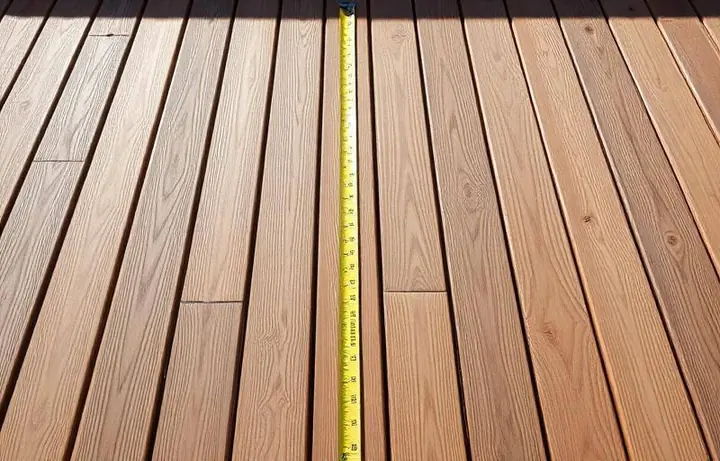
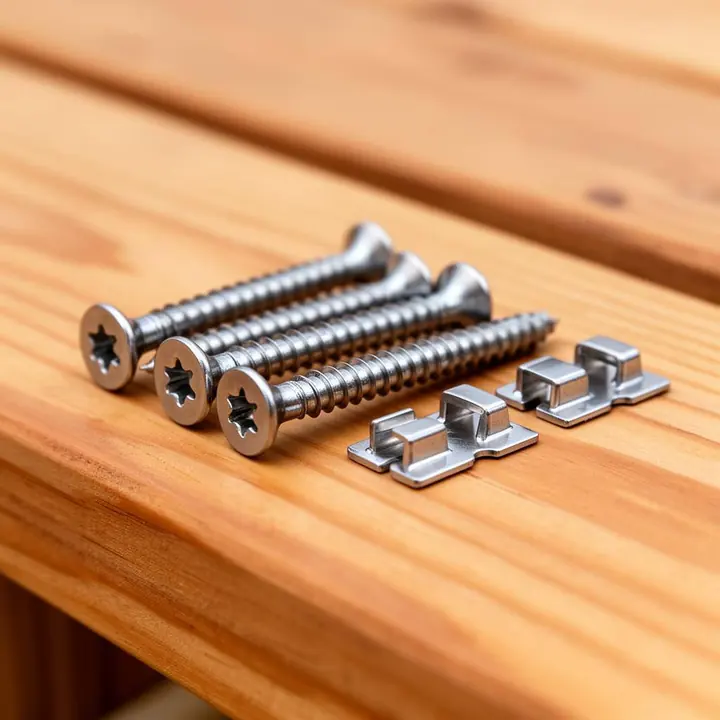
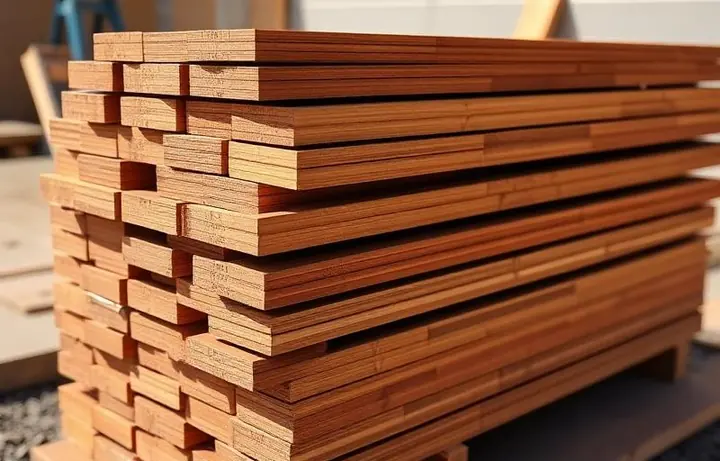
Deck Board Calculator
Board count is where deck estimates most often go wrong, because the number depends on the gap, the board width and how you handle the run lengths. Ordering by area alone always comes up short. This works the count from the real board width plus the gap, adds a realistic waste allowance, and shows the linear footage to take to the counter.
Built and maintained by DixonAppStudio LLC · How the figures are worked out · Report an error
What you'll need
As an Amazon Associate I earn from qualifying purchases.

CAMO EDGEClip Universal Hidden Deck Fastener Clip (900 ct) | (0344356), 305 Stainless Gusset and Screw, Clip Creates 3/16 in (4.7 mm) Spacing, For Use With Composite Decking Boards
$349.40
Check price on Amazon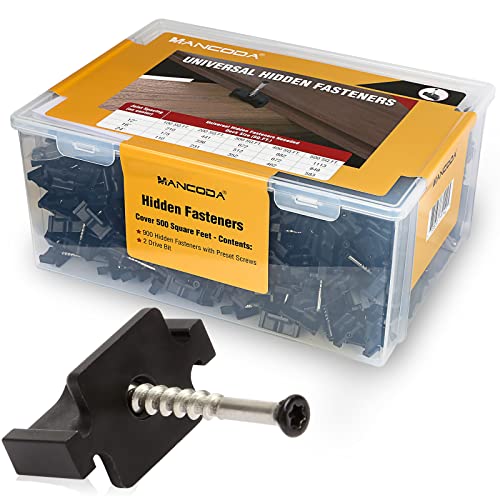
ManCoda Hidden Deck Fasteners for Composite Decking Board, Universal Hidden Fasteners with Stainless Steel Screws, Composite Decking Clips for Wood Deck Framing, 900 Pack for 500 SQ.FT.
$239.00
Check price on Amazon
8 Pcs ABS Deck Spacer Tool, 4 Thicknesses Orange Deck Board Spacers | Deck Spacers Assorted (1/16", 1/8", 3/16", 1/4") for Pressure Treated Composite Decking
$9.99
Check price on Amazon
Deck Screws 2-1/2 Inch, #10 x 2-1/2, 5lb, 385Pcs Rust Resistant, Brown Epoxy Coated, Outdoor Screws, Torx/Star Drive, T25 Bit
$24.99
Check price on AmazonPrices as of Oct 25, 2026, 4:32 AM UTC. Product prices and availability are accurate as of the date/time indicated and are subject to change. Any price and availability information displayed on Amazon.com at the time of purchase will apply to the purchase of this product.
Shopping for someone? See our guide to best gifts for deck builders & diy deck builders.
Laying something other than straight runs? See deck board patterns and how much extra each one uses.
Board count is where DIY budgets go wrong
The most common cost overrun on a DIY deck is buying too few (or too many) decking boards. Order 10% short and you're making a second lumberyard trip mid-project — with a good chance the second batch doesn't color-match. Order 25% long and you're eating hundreds of dollars in returns and restocking fees. The calculator above splits the difference: it computes exact board coverage from your deck dimensions, board width, and gap, then rounds up for practical purchase.
Standard board widths and coverage
- 5/4×6: the residential default. Actual width 5.5", covers 5.75" with a standard 1/4" gap.
- 2×6: thicker and stiffer, used for wider joist spacing. Same coverage as 5/4×6.
- 1×6 composite (grooved): actual width usually 5.25–5.5" depending on brand.
- Narrow (5/4×4): premium look, ~30% more boards required.
Waste factor and how to size it
Add 10% waste on a simple rectangle, 15% on an angled or wraparound deck, and up to 20% on multi-level or picture-frame layouts. Waste covers end-cuts, defects, and the inevitable board or two you'll wreck learning the hidden-fastener system. Some suppliers accept unopened bundles as returns — worth confirming before you decide to run tight or loose.
Board length — pick your seams first
Choose your board length to minimize seams. If your deck is 16 feet in the direction of the boards, buy 16-foot lengths and run them without a butt joint. Deck runs of 12–20 feet nearly always cost less in labor and look better with the longer board even if it costs 10–15% more per linear foot. Anything longer than 20 feet, plan a picture-frame or a mid-deck breaker board where two shorter runs meet.
Getting a linear-footage number for the lumberyard
The calculator returns board count based on your inputs. Multiply by your chosen board length to get total linear footage — the number a lumberyard actually quotes on. Example: 26 boards at 16 feet = 416 linear feet. Compare to a linear footage-based calculation for a cross-check before you order.
Get the Smart Decking Calculator app for Android
Estimate decks on the go, save projects, and share them with contractors.
Building something else? Try our sister calculators
Smart Fencing Calculator
Estimate fence cost by material and linear footage.
Smart Roofing Calculator
Free roof replacement cost estimates by material.
Fence Calculator
Android app — posts, pickets, panels and fence cost.
Gravel & Stone Calculator
Android app — gravel under the deck and footings, in tons and yards.
Roofing Calculator
Android app — roof squares, shingles and covered-deck roofs.
Drywall Calculator
Android app — drywall sheets, mud, and tape estimates.
Frequently asked questions
- How many deck boards do I need?
- Divide the deck width in inches by the board's actual width plus the gap, then multiply by how many board lengths it takes to cross the deck. A 5/4x6 board is 5 1/2 inches actual, not 6, so a 12 ft wide deck at a 1/8 inch gap needs 26 rows — not 24. Getting the actual width right is where most estimates go astray.
- How much waste should I allow on decking?
- Ten percent on a plain rectangular deck with runs that match stock lengths, and 15 percent once you add a diagonal layout, a picture-frame border or an awkward shape. Buying one extra board is far cheaper than a second trip, and boards from a later batch rarely match the first in colour — particularly with composite.
- What length deck boards should I buy?
- Whatever crosses the deck with the fewest joints. A 16 ft deck is best in 16 ft boards; buying 12 ft boards means a butt joint in every row, and every joint needs blocking beneath it and becomes a place water sits. Where a joint is unavoidable, stagger them across the deck rather than lining them up.
- Do deck boards run parallel or perpendicular to the house?
- Perpendicular to the joists, which in the usual framing layout means parallel to the house. Running the boards the other way means rotating the whole frame, because joists must always cross the boards at right angles. A diagonal layout at 45 degrees is the compromise, and it needs the joist spacing tightened to compensate.