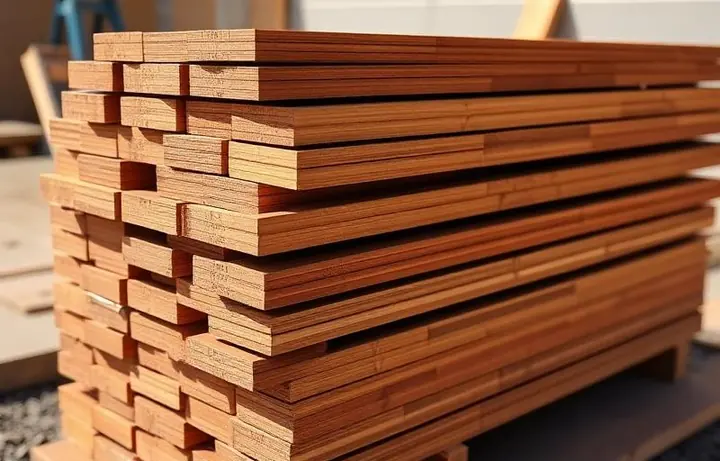
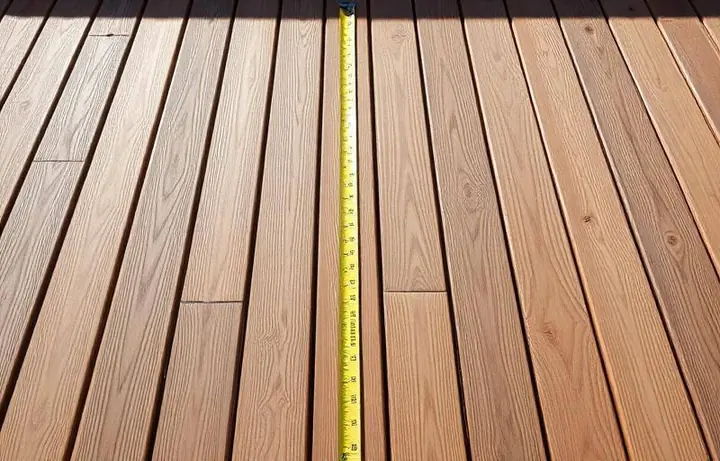
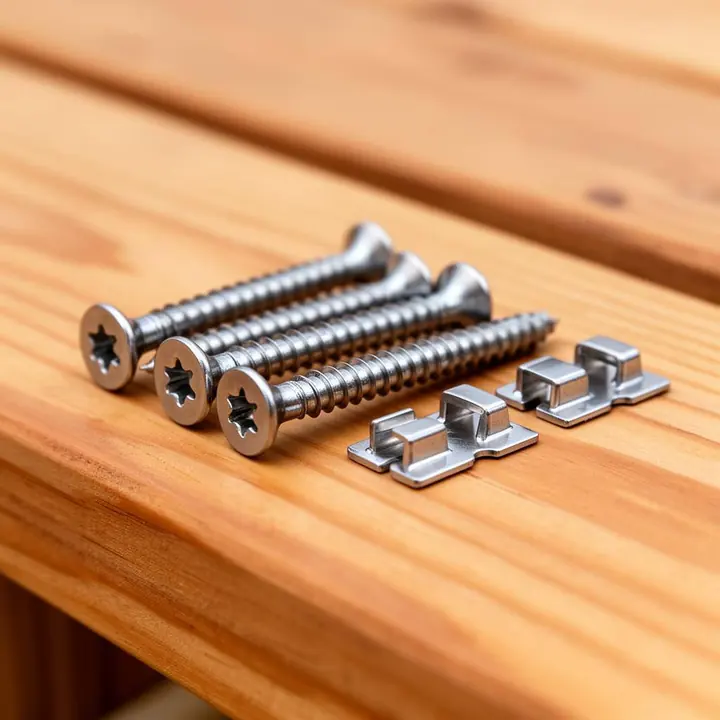
Deck Board Calculator
Enter your deck dimensions and board profile to get the exact number of deck boards, total linear feet, and a waste allowance. Works for 5/4×6 pressure-treated, 1×6 composite, 2×6, and picture-frame layouts.
What you'll need
As an Amazon Associate I earn from qualifying purchases.

ShunHong Outdoor Solid Composite Decking Boards Color Samples Pack | Polymer Composite Decking for All Weather Use,Poolside,Backyard,Patio(3 Pcs, 0.5ft Color Samples)
$15.99
Check price on Amazon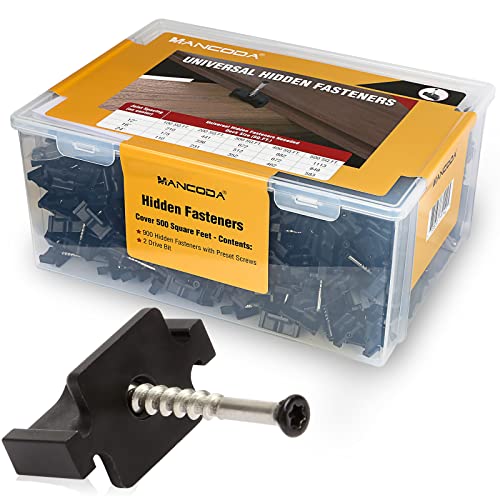
ManCoda Hidden Deck Fasteners for Composite Decking Board, Universal Hidden Fasteners with Stainless Steel Screws, Composite Decking Clips for Wood Deck Framing, 900 Pack for 500 SQ.FT.
$239.00
Check price on Amazon
8 Pcs ABS Deck Spacer Tool, 4 Thicknesses Orange Deck Board Spacers
$9.99
Check price on Amazon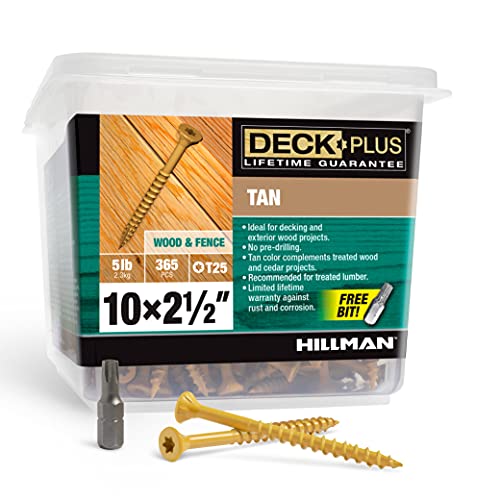
Deck Plus Deck Screws, #10 x 2-1/2in, 365 Pieces,5 Lb Box, Tan | Epoxy Coated Exterior Wood and Fence Screws,Star drive with Included Coarse Thread T25 bit included , Outdoor Rust Resistant
$29.98
Check price on AmazonPrices as of Oct 16, 2026, 5:33 AM UTC. Product prices and availability are accurate as of the date/time indicated and are subject to change. Any price and availability information displayed on Amazon.com at the time of purchase will apply to the purchase of this product.
Shopping for someone? See our backyard gift guide for deck builders & DIYers.
Not a rectangle? Measure it with the deck square footage calculator.
How deck board counts are actually calculated
Every board count comes down to one number: coverage width. A nominal 5/4×6 deck board measures 5.5 inches across the face, and once you add the 1/4-inch expansion gap between boards, each row covers 5.75 inches of deck. Divide your deck width in inches by that figure and you have the number of rows. Multiply rows by the length of the run and you have linear feet. Divide linear feet by the length of board you can buy and you have your board count. The calculator above runs that chain for you and adds a waste allowance, because the arithmetic is easy — it's the waste that trips people up.
Board coverage cheat sheet
| Board profile | Face width | Gap | Coverage per row | Sq ft per 16 ft board |
|---|---|---|---|---|
| 5/4×6 pressure-treated | 5.5" | 1/4" | 5.75" | 7.7 sq ft |
| 1×6 grooved composite | 5.5" | 3/16" | 5.69" | 7.6 sq ft |
| 5/4×4 pressure-treated | 3.5" | 1/4" | 3.75" | 5.0 sq ft |
| 2×6 framing-grade decking | 5.5" | 1/4" | 5.75" | 7.7 sq ft |
| 1×4 ipe hardwood | 3.5" | 1/8" | 3.625" | 4.8 sq ft |
Board counts for common deck sizes
| Deck size | Area | Rows (5.5" + 1/4") | Linear feet + 10% | 16 ft boards |
|---|---|---|---|---|
| 10 × 10 | 100 sq ft | 21 | 231 lf | 15 |
| 12 × 12 | 144 sq ft | 26 | 344 lf | 22 |
| 12 × 16 | 192 sq ft | 26 | 458 lf | 29 |
| 16 × 16 | 256 sq ft | 34 | 599 lf | 38 |
| 16 × 20 | 320 sq ft | 34 | 748 lf | 47 |
| 20 × 20 | 400 sq ft | 42 | 924 lf | 58 |
Where the waste actually goes
A 10% allowance is not padding — it disappears fast. Butt joints force you to cut boards to land on joists, which leaves offcuts too short to reuse. Picture-frame borders eat a full board's width on every side plus mitered ends. Boards arrive with crooks, checks, and mill damage; on a pressure-treated bundle, expect one board in fifteen to be unusable for a visible surface. If your layout involves 45-degree runs or a herringbone pattern, jump to 20% — the diagonal cuts on both ends of every board double your drop.
Plan the joints before you order
If your deck runs longer than the boards you can buy, joints are unavoidable, and they must land on framing. Two options: double the joist at the joint line so each board end has a full 1.5 inches of bearing, or stagger joints across three or more joist bays so the seam line isn't visible. Never let a joint float between joists — the board ends will cup and the fasteners will pull. Deciding this before you order changes your board length choice, and often saves money: two 12 ft boards to span 22 feet wastes less than one 20 ft plus one 8 ft cut down.
Ordering tips that save money
Buy the longest board that covers your run in one piece, even if the price per linear foot is slightly higher — you eliminate joints and the labor to frame them. Order everything in one delivery, since composite dye lots shift between production runs and a top-up order rarely matches. And check whether your supplier sells by the piece or the linear foot; on 20 ft composite, per-piece pricing is often 5-8% cheaper. Once you know your count, use the deck fastener calculator to size your screws or hidden clips to match.
Get the Smart Decking Calculator app for Android
Estimate decks on the go, save projects, and share them with contractors.
Building something else? Try our sister calculators
Smart Fencing Calculator
Estimate fence cost by material and linear footage.
Smart Roofing Calculator
Free roof replacement cost estimates by material.
Fence Calculator
Android app — posts, pickets, panels and fence cost.
Gravel & Stone Calculator
Android app — gravel under the deck and footings, in tons and yards.
Roofing Calculator
Android app — roof squares, shingles and covered-deck roofs.
Drywall Calculator
Android app — drywall sheets, mud, and tape estimates.
Frequently asked questions
- How many deck boards do I need for a 12x16 deck?
- A 12×16 deck (192 sq ft) using 5.5-inch boards with a 1/4-inch gap needs 26 rows. At 16 ft long, that's 26 boards plus 10% waste — about 29 boards. In linear feet: roughly 458 linear feet including waste.
- How many deck boards are in a square foot?
- A 5.5-inch board with a 1/4-inch gap covers 0.479 linear feet per square foot of deck — or put another way, one 16 ft board of 5/4×6 covers about 7.7 square feet.
- What gap should I leave between deck boards?
- Use 1/4 inch for pressure-treated and most composite decking, 3/16 inch for hidden-clip composite systems (the clips set the gap automatically), and 1/8 inch for kiln-dried hardwood like ipe, which shrinks after install.
- How much waste should I add for deck boards?
- Add 10% for a rectangular deck, 15% if you're picture-framing or cutting angles, and 20% for diagonal or herringbone patterns. Ordering short is far more expensive than 10% overage because dye lots change between shipments.
- Do deck boards run the long way or short way?
- Boards run perpendicular to the joists. Most decks run boards parallel to the house, which means joists run away from the house. Running boards diagonally requires joists spaced 12 inches on center.