Square Feet to Linear Feet Calculator
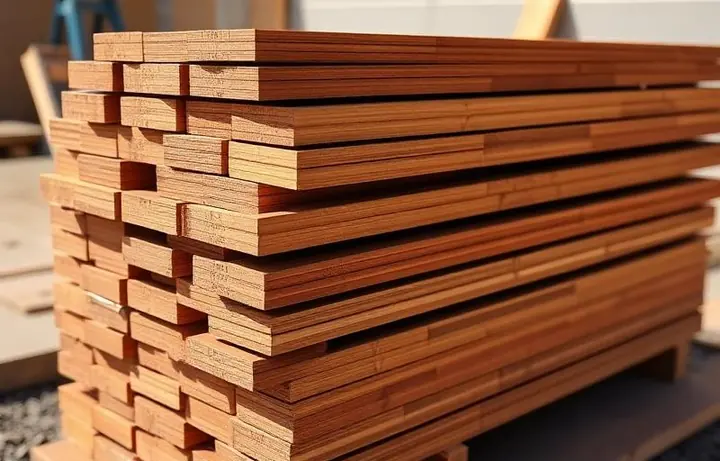
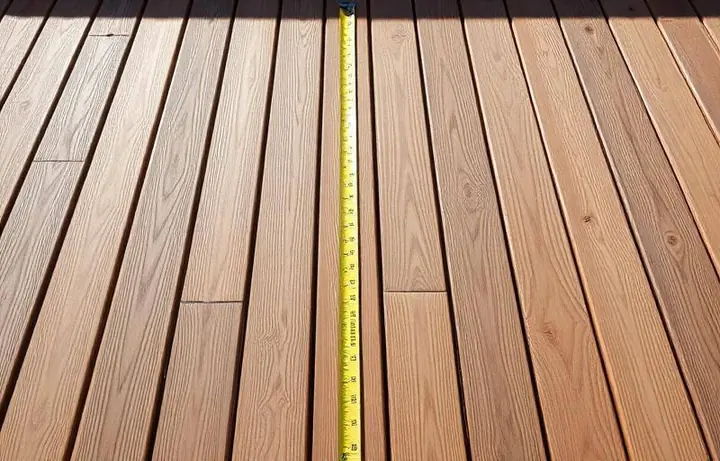
Lumberyards sell decking by the linear foot, but you measure your deck in square feet. This bidirectional converter handles both directions for any board width and gap, so your order matches your deck.
What you'll need
As an Amazon Associate I earn from qualifying purchases.

ShunHong Outdoor Solid Composite Decking Boards Color Samples Pack | Polymer Composite Decking for All Weather Use,Poolside,Backyard,Patio(3 Pcs, 0.5ft Color Samples)
$15.99
Check price on Amazon
CRAFTSMAN 25-Ft Tape Measure with Fraction Marketing, Retractable, Manual-Locking Blade (CMHT37443S)
Save 35%
$12.98Typical price:: $19.98

8 Pcs ABS Deck Spacer Tool, 4 Thicknesses Orange Deck Board Spacers
$9.99
Check price on Amazon
Treslam Outdoor Composite Decking Boards 96'' x 5.4'' x 0.9''(9-Pieces), Black Rigid Surface Hard Core, Easy DIY Flooring, with The Kit Stainless Steel Spiked Clips, Screws, and Edge Clips (Black)
$279.99
Check price on AmazonPrices and savings as of Oct 17, 2026, 4:36 AM UTC. Product prices and availability are accurate as of the date/time indicated and are subject to change. Any price and availability information displayed on Amazon.com at the time of purchase will apply to the purchase of this product.
Shopping for someone? See our backyard gift guide for deck builders & DIYers.
Odd-shaped deck? Get the area first with the deck square footage calculator.
Why decking is sold in linear feet
Lumber has been priced by length for two centuries because a mill's output is measured in board runs, not floor area. Your deck, on the other hand, is a rectangle you measure in square feet. Bridging the two takes one number — the coverage width of a single board, meaning its actual face width plus the gap you'll install it with. Once you have that, both directions are simple multiplication, and the formulas never change:
Linear feet = square feet × 12 ÷ (board width + gap)
Square feet = linear feet × (board width + gap) ÷ 12
Conversion chart: square feet to linear feet
| Deck area | 5.5" board, 1/4" gap | 5.5" board, 3/16" gap | 3.5" board, 1/4" gap |
|---|---|---|---|
| 100 sq ft | 209 lf | 211 lf | 320 lf |
| 144 sq ft | 301 lf | 304 lf | 461 lf |
| 200 sq ft | 417 lf | 422 lf | 640 lf |
| 288 sq ft | 601 lf | 607 lf | 922 lf |
| 400 sq ft | 835 lf | 843 lf | 1,280 lf |
| 500 sq ft | 1,043 lf | 1,054 lf | 1,600 lf |
All figures above are net coverage. Add your waste allowance — 10% for straight rectangular layouts, 15-20% for angles, borders, or diagonal patterns — before you place the order.
Board feet is a different unit entirely
Don't confuse linear feet with board feet. A board foot is a volume unit: 144 cubic inches, or a piece 12 inches wide, 1 inch thick, and 1 foot long. Framing lumber and hardwood are often quoted in board feet, while decking is almost always quoted per linear foot or per piece. To convert, multiply nominal thickness × nominal width × length in feet, then divide by 12. A 16 ft 2×8 joist is 21.3 board feet.
Getting your square footage right first
The conversion is only as good as the area you feed it. Measure the deck framing footprint, not the house wall, and remember that decking often overhangs the rim joist by an inch on each open side. For L-shaped decks, split the shape into rectangles and add them. For a deck around a round pool, subtract the pool circle from the outer circle — or use the pool deck calculator which handles the ring math for you. Then run the total through the tool above and check it against the deck board calculator for a piece count.
Get the Smart Decking Calculator app for Android
Estimate decks on the go, save projects, and share them with contractors.
Building something else? Try our sister calculators
Smart Fencing Calculator
Estimate fence cost by material and linear footage.
Smart Roofing Calculator
Free roof replacement cost estimates by material.
Fence Calculator
Android app — posts, pickets, panels and fence cost.
Gravel & Stone Calculator
Android app — gravel under the deck and footings, in tons and yards.
Roofing Calculator
Android app — roof squares, shingles and covered-deck roofs.
Drywall Calculator
Android app — drywall sheets, mud, and tape estimates.
Frequently asked questions
- How do you convert square feet to linear feet for decking?
- Multiply the square footage by 12, then divide by the board face width plus the gap in inches. For 5.5-inch boards with a 1/4-inch gap: 200 sq ft × 12 ÷ 5.75 = 417 linear feet.
- How many linear feet is 200 square feet of decking?
- About 417 linear feet using 5.5-inch boards with a 1/4-inch gap, or 626 linear feet using 3.5-inch boards. Add 10% waste before ordering.
- Is linear feet the same as lineal feet?
- Yes. Lumberyards use both terms interchangeably to mean the total running length of board, regardless of width.
- How do I calculate my deck's square footage?
- Multiply length by width for a rectangle. For L-shaped decks, split the deck into rectangles, calculate each, and add them together. For a round pool deck, subtract the pool area from the outer circle area.