Trex vs TimberTech: Cost and Value Compared
Published May 13, 2026 · 9 min read
Trex and TimberTech are the two names that show up on almost every composite deck quote in 2026. They're closer than the marketing suggests — both are capped, both carry long warranties, both cost roughly 2× pressure-treated. The real decision comes down to composite versus PVC, product tier, and what your local yard actually stocks.
Installed cost by product tier (2026)
| Tier | Trex line | TimberTech line | Installed $/sq ft | 12×16 deck |
|---|---|---|---|---|
| Entry composite | Enhance Basics | TimberTech Prime | $38 – $45 | $7,300 – $8,600 |
| Mid composite | Enhance Naturals | TimberTech Edge | $45 – $52 | $8,600 – $10,000 |
| Premium composite | Transcend | TimberTech Terrain+ / Legacy | $52 – $62 | $10,000 – $11,900 |
| PVC | Trex Signature | Azek (Harvest / Vintage / Arbor) | $58 – $72 | $11,100 – $13,800 |
Ranges are installed averages including framing, labor, and hardware — not board-only pricing. Price your exact footprint in the Trex & composite decking cost calculator.
Composite vs PVC: the actual fork in the road
Trex is wood-plastic composite (WPC) across its entire lineup: reclaimed wood flour plus recycled polyethylene, capped on three or four sides. TimberTech sells WPC too, but its Azek line is cellular PVC — no wood content at all.
- Weight: PVC boards are roughly 30–40% lighter, which matters on long spans and second-story decks.
- Heat: PVC and light colors stay cooler underfoot than dark WPC.
- Moisture: With zero wood content, PVC can't absorb water — the best choice for pool surrounds and humid coastal builds.
- Feel and look: Many builders think WPC reads more like real wood; PVC reads slightly more uniform.
- Price: PVC runs 15–25% more installed.
Warranty comparison
Both brands offer 25-year limited residential warranties on entry lines, rising to 30–50 years on premium and PVC products, and both include fade-and-stain coverage on capped boards. Read the fine print on labor: warranty coverage is almost always material-only, so a board replacement 12 years out still costs you a crew day.
Installation differences that affect your quote
Both brands support hidden fastener systems and both specify gapping for thermal expansion — but joist spacing rules differ by line. Several composite products require 12-inch on-center framing for 45-degree diagonal layouts and stair treads, versus the standard 16-inch. If your contractor quotes a diagonal pattern, confirm the framing is priced at 12 inches on center or you'll get bounce. Check spans first in the deck joist span chart and size the frame with the joist calculator.
20-year cost of ownership
On a 12×16 deck, pressure-treated costs about $4,300 installed but needs cleaning and sealing every two years — call it $250 a cycle, or $2,500 over 20 years, plus likely board replacement around year 15. A $9,000 composite deck needs a wash and a bucket of deck cleaner each spring, maybe $60 a year. Total 20-year outlay lands near $7,300 for wood versus $10,200 for composite — and the composite deck still has a decade of life left. The full math is in our composite vs wood comparison.
How to choose
- Pool, coastal, or full-sun deck? Go PVC (Azek or Trex Signature), light color.
- Tight budget but want composite? Trex Enhance Basics or TimberTech Prime.
- Want the most wood-like look? Premium WPC — Transcend or TimberTech Legacy.
- Whichever your local yard stocks deep. Availability beats brand loyalty; special orders add 2–6 weeks and freight.
Always get samples and set them in the sun on your actual site for a day before signing. Then lock the budget with the deck cost calculator.
Gear and supplies featured in this guide
As an Amazon Associate I earn from qualifying purchases.

ShunHong Outdoor Solid Composite Decking Boards Color Samples Pack | Polymer Composite Decking for All Weather Use,Poolside,Backyard,Patio(3 Pcs, 0.5ft Color Samples)
$15.99
Check price on Amazon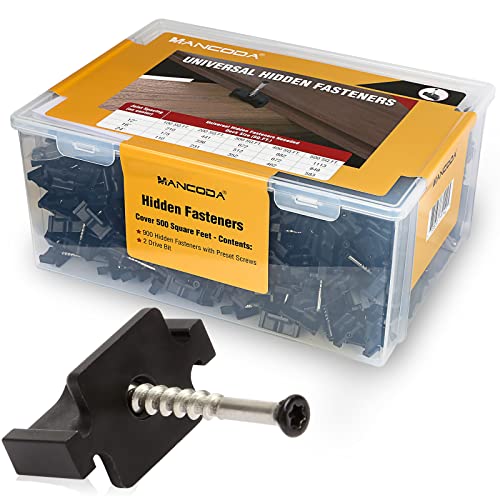
ManCoda Hidden Deck Fasteners for Composite Decking Board, Universal Hidden Fasteners with Stainless Steel Screws, Composite Decking Clips for Wood Deck Framing, 900 Pack for 500 SQ.FT.
$239.00
Check price on Amazon
VGBUY 90Pcs Deck Screws, #8#10 Wood Screws Assortment Kit, Heavy-Duty Exterior,Star Drive,Bronze (1-1/2",2",2-1/2",3"),T25 Star Bit
$9.99
Check price on Amazon
Treslam Outdoor Composite Decking Boards 96'' x 5.4'' x 0.9''(9-Pieces), Black Rigid Surface Hard Core, Easy DIY Flooring, with The Kit Stainless Steel Spiked Clips, Screws, and Edge Clips (Black)
$279.99
Check price on AmazonPrices as of Oct 17, 2026, 4:36 AM UTC. Product prices and availability are accurate as of the date/time indicated and are subject to change. Any price and availability information displayed on Amazon.com at the time of purchase will apply to the purchase of this product.
Shopping for someone? See our backyard gift guide for deck builders & DIYers.
Frequently asked questions
Is Trex or TimberTech cheaper?
Entry-level Trex Enhance is generally the cheaper of the two, while TimberTech's PVC lines (Azek) sit at the premium end. Mid-range products from both brands land within a few dollars per square foot of each other.
What is the difference between Trex and TimberTech?
Trex is wood-plastic composite across its whole range. TimberTech sells both wood-plastic composite (Edge, Prime, Terrain) and cellular PVC (Azek), which is lighter, fully capped, and more heat- and stain-resistant.
Does composite decking get hot?
Yes. Dark composite boards in direct sun can be noticeably hotter than wood. PVC boards and lighter colors run cooler, which is why light-colored Azek is common around pools.
How long do Trex and TimberTech decks last?
Both carry 25–50 year limited residential warranties depending on the product line, and both typically deliver 25–30+ years of service with annual washing.
Get your deck estimate in 60 seconds
Free, no signup required.
Building something else? Try our sister calculators
Smart Fencing Calculator
Estimate fence cost by material and linear footage.
Smart Roofing Calculator
Free roof replacement cost estimates by material.
Fence Calculator
Android app — posts, pickets, panels and fence cost.
Gravel & Stone Calculator
Android app — gravel under the deck and footings, in tons and yards.
Roofing Calculator
Android app — roof squares, shingles and covered-deck roofs.
Drywall Calculator
Android app — drywall sheets, mud, and tape estimates.