Best Post Hole Digger for Deck Footings
Which digger suits your soil and hole count, what diameter and depth to look for, and how many holes your deck needs.
Updated · by the Smart Decking Calculator team
As an Amazon Associate I earn from qualifying purchases. This guide is written from product specifications, building-code requirements and our calculators — it is not a hands-on product test. Affiliate disclosure
A deck footing hole is bigger and deeper than a fence post hole: typically 10 to 16 inches across and down to the local frost line, which is 12 inches in the South and 36 to 60 inches or more in the North. A tool that is fine for a mailbox post can be miserable for eight of those.
Below, each type of digger is compared for footing work, with a hole count worked out by our deck post calculator and concrete from the deck footing calculator.
Compared by type
Pros and cons describe each type from its specifications. The product in each row is a current, well-rated option of that type on Amazon, refreshed twice a day — check the listing's specifications against the “check” line before you buy.
Manual clamshell digger
Best for: A handful of holes in soft or moist soil
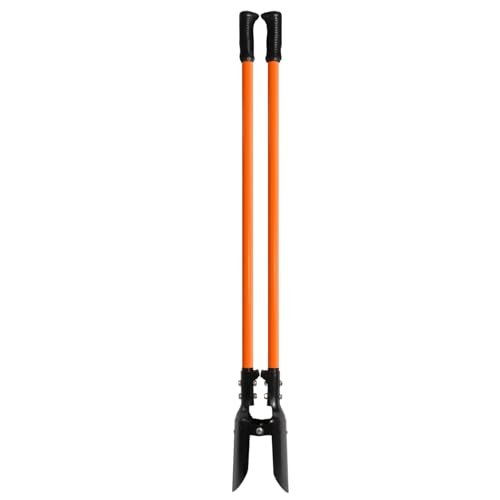 Nohovu Post Hole Digger, Heavy Duty with Fiberglass Handle, Carbon Steel Blades, 58 Inches, Orange & Black$53.99Check price on Amazon
Check: Handle material (fibreglass or steel) and the blade width
- Cheap, quiet and always starts
- Clean, straight sides in clay and loam
- Works around roots and next to foundations where machines are risky
- Slow and tiring past 3 ft deep
- The handles limit hole width — hard to go past about 10 in
- Struggles in rocky or dry, hard soil
Auger bit for a cordless drill
Best for: Pilot holes and small deck blocks, not full footings
 4 x 16 Inch Auger Drill Bit for Planting–Garden Spiral Hole Drill Planter for Bulbs, Bedding Plants & Umbrella Holes|3/8" Hex Drive|The Ultimate Bulb Planter Tool for Cordless Drill$21.99Check price on Amazon
Check: Bit diameter and length, and the shank size your drill takes
- Inexpensive if you already own a high-torque drill
- Light and easy to store
- Good for loosening soil before a manual digger
- Most bits are 2–6 in wide — too narrow for a footing on their own
- Drills can kick violently when the bit catches a root
- Short reach
Gas one-person auger
Best for: Many holes, or a whole deck in open ground
 VEVOR Post Hole Digger, 43cc 1250W Auger Earth Digger, Gas-Powered (Fuel)$115.39Check price on Amazon
Check: Engine size, the bit diameters included, and a brake or clutch
- Fastest way through sandy and loamy soil
- Bits in 8–12 in sizes reach footing width
- Extensions reach frost depth
- Heavy and loud; kicks when it hits rock or roots
- Two-stroke fuel mixing and maintenance
- A real injury risk if the bit binds — follow the manual
Cordless (battery) auger
Best for: Occasional projects where you want no fuel
 EGO Power+ 8" Auger, Post Hole Digger, Drill Auger for Digging Holes, Electric Cordless, Battery and Charger Not Included - EG0800$379.00Check price on Amazon
Check: Battery voltage, bit sizes and whether the battery is included
- Quieter and no fuel to store
- Instant start and reverse to free a stuck bit
- Lighter than most gas units
- Run time falls quickly in clay
- Battery and charger add cost if not already on your platform
- Fewer large-diameter bits
Digging (spud) bar
Best for: Breaking rock and hardpan, and tamping
 Leriton 60" (5ft) Chisel Digging Bar 13Lb (6.2kg) Pencil Point Wrecking Pry Road Bar Post Hole Diggers for Digging Prying of Dirt and Large Rocks$99.99Check price on Amazon
Check: Length and weight — heavier bars break rock with less effort
- Breaks up stones and roots that stop every other tool
- Doubles as a tamper for backfill
- Lasts a lifetime
- Does not remove soil — you still need a digger
- Heavy to swing all day
- Not much use in loose sand
| Type | Current option | Pros | Cons |
|---|---|---|---|
| Manual clamshell diggerBest for: A handful of holes in soft or moist soilCheck: Handle material (fibreglass or steel) and the blade width | Nohovu Post Hole Digger, Heavy Duty with Fiberglass Handle, Carbon Steel Blades, 58 Inches, Orange & Black$53.99Check price on Amazon |
|
|
| Auger bit for a cordless drillBest for: Pilot holes and small deck blocks, not full footingsCheck: Bit diameter and length, and the shank size your drill takes | 4 x 16 Inch Auger Drill Bit for Planting–Garden Spiral Hole Drill Planter for Bulbs, Bedding Plants & Umbrella Holes|3/8" Hex Drive|The Ultimate Bulb Planter Tool for Cordless Drill$21.99Check price on Amazon |
|
|
| Gas one-person augerBest for: Many holes, or a whole deck in open groundCheck: Engine size, the bit diameters included, and a brake or clutch | VEVOR Post Hole Digger, 43cc 1250W Auger Earth Digger, Gas-Powered (Fuel)$115.39Check price on Amazon |
|
|
| Cordless (battery) augerBest for: Occasional projects where you want no fuelCheck: Battery voltage, bit sizes and whether the battery is included | EGO Power+ 8" Auger, Post Hole Digger, Drill Auger for Digging Holes, Electric Cordless, Battery and Charger Not Included - EG0800$379.00Check price on Amazon |
|
|
| Digging (spud) barBest for: Breaking rock and hardpan, and tampingCheck: Length and weight — heavier bars break rock with less effort | Leriton 60" (5ft) Chisel Digging Bar 13Lb (6.2kg) Pencil Point Wrecking Pry Road Bar Post Hole Diggers for Digging Prying of Dirt and Large Rocks$99.99Check price on Amazon |
|
|
Prices as of Sep 30, 2026, 4:35 AM UTC. Product prices and availability are accurate as of the date/time indicated and are subject to change. Any price and availability information displayed on Amazon.com at the time of purchase will apply to the purchase of this product.
How many holes, and how big
Count the holes first: that decides whether hand tools are reasonable. The deck post calculator counts posts from the deck size and beam layout, and the deck footing calculator turns the hole size into concrete. Both examples below use those functions.
Worked example: A 20 × 14 ft freestanding deck, 4 ft high
- Beam lines: 3; posts per beam at 8 ft spacing: 4
- Posts, and so footing holes: 12 posts
- Each hole 12 in across and 36 in deep holds 2.36 cu ft of concrete
- All 12 holes: 28.27 cu ft — about 63 bags of 60 lb concrete
12 footing holes of 12 in × 36 in. That is a long day with a manual digger even in soft soil; in clay, rock or at northern frost depths an auger (bought or rented) earns its keep.
Frost depth sets the depth, not the tool. See the deck footing depth guide for how it is set and why holes must reach below it.
Matching the digger to the ground
| Ground | Few holes (under 6) | Many holes |
|---|---|---|
| Sandy or loam | Manual clamshell | Gas or cordless auger |
| Heavy clay | Manual digger plus digging bar | Gas auger with a clutch; expect slow going |
| Rocky | Digging bar and manual digger | Rent a towable or two-person auger |
| Near a foundation or utilities | Manual only | Manual only |
For a large deck in rocky ground, renting a towable hydraulic auger for a day is often cheaper than buying and safer than a handheld unit.
What to look for on the listing
- Bit diameter. Footings are usually 10 to 16 in; a 6 in bit only suits fence posts and pilot holes.
- Reach. Add the bit length and any extension, and compare with your frost depth.
- Kickback control. A clutch, brake or wide handlebars matter on any powered auger.
- Weight. Most gas units are heavy enough that a two-person model is worth it for large bits.
- Handles. Fibreglass handles on a manual digger are lighter and do not rot.
Shop the types above
As an Amazon Associate I earn from qualifying purchases.
Nohovu Post Hole Digger, Heavy Duty with Fiberglass Handle, Carbon Steel Blades, 58 Inches, Orange & Black
Save 5%
$53.99List Price:: $56.99
4 x 16 Inch Auger Drill Bit for Planting–Garden Spiral Hole Drill Planter for Bulbs, Bedding Plants & Umbrella Holes|3/8" Hex Drive|The Ultimate Bulb Planter Tool for Cordless Drill
$21.99
Check price on AmazonVEVOR Post Hole Digger, 43cc 1250W Auger Earth Digger, Gas-Powered (Fuel)
Save 8%
$115.39Typical price:: $125.90
EGO Power+ 8" Auger, Post Hole Digger, Drill Auger for Digging Holes, Electric Cordless, Battery and Charger Not Included - EG0800
$379.00
Check price on AmazonLeriton 60" (5ft) Chisel Digging Bar 13Lb (6.2kg) Pencil Point Wrecking Pry Road Bar Post Hole Diggers for Digging Prying of Dirt and Large Rocks
$99.99
Check price on Amazon
VNIMTI Post Hole Digger Tool, Heavy Duty Post Hole Digger with Fiberglass Handle, 58 Inches
$56.99
Check price on AmazonPrices and savings as of Sep 30, 2026, 4:35 AM UTC. Product prices and availability are accurate as of the date/time indicated and are subject to change. Any price and availability information displayed on Amazon.com at the time of purchase will apply to the purchase of this product.
Safety notes
- Call 811 (in the US) a few days before digging so buried power, gas and water lines are marked. It is free and required.
- Powered augers can twist hard when the bit catches a root or rock. Keep a firm stance, let go of the throttle, and never wrap the cord or handles around your body.
- Wear eye protection and boots; cover open holes so nobody steps into one.
- Check local rules on footing size and depth before you dig — the inspector usually looks at the holes before concrete goes in.
Frequently asked questions
What size post hole do I need for a deck?
Footing holes are usually 10 to 16 inches across, set by the load on each post and your soil. The deck post calculator shows the load per post; your local code or plans set the diameter.
How deep should deck post holes be?
Below your local frost line — about 12 inches in the warmest regions and 36 to 60 inches or more in the North. The building department can tell you the exact depth.
Is a gas auger worth it for one deck?
For fewer than about six holes in soft soil, a manual digger is fine. For more holes, deep frost lines or clay, a gas or cordless auger — bought or rented — saves a lot of effort.
Can a drill-powered auger dig deck footings?
Most drill auger bits are too narrow for a full footing. They are useful for loosening soil and for pilot holes, then a manual digger widens the hole.
How do I get through rocks when digging post holes?
Break them with a heavy digging bar and lift the pieces out with a clamshell digger. For large rocks or ledge, move the footing slightly if the plans allow, or rent a hydraulic auger.
Get your deck estimate in 60 seconds
Free, no signup required.