Best Deck Screws & Hidden Fasteners
Fasteners are the cheapest part of a deck and the first thing to fail. Pick the wrong screw and you'll be replacing rusted, split-out boards in two seasons. Here's the right screw for every job.
As an Amazon Associate I earn from qualifying purchases. Affiliate disclosure.
Top picks for this category
As an Amazon Associate I earn from qualifying purchases.
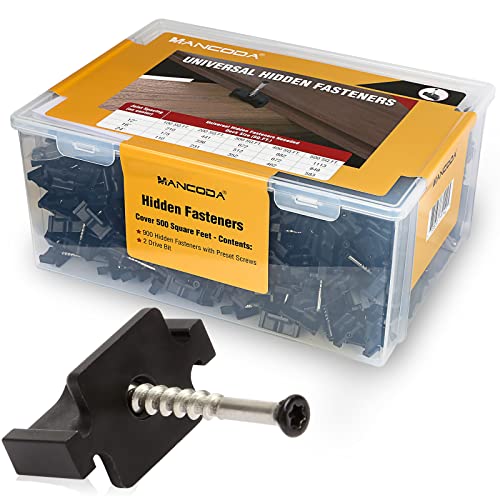
ManCoda Hidden Deck Fasteners for Composite Decking Board, Universal Hidden Fasteners with Stainless Steel Screws, Composite Decking Clips for Wood Deck Framing, 900 Pack for 500 SQ.FT.
$239.00
Check price on Amazon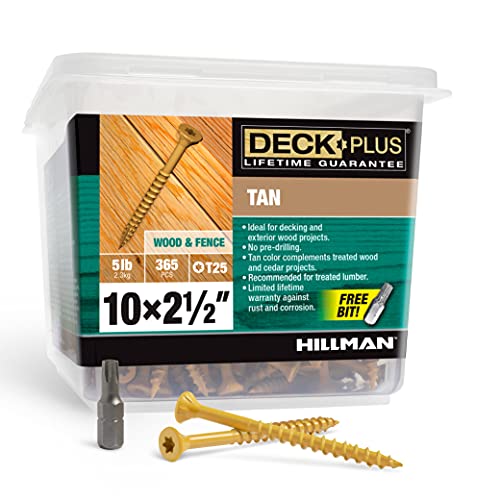
Deck Plus Deck Screws, #10 x 2-1/2in, 365 Pieces,5 Lb Box, Tan | Epoxy Coated Exterior Wood and Fence Screws,Star drive with Included Coarse Thread T25 bit included , Outdoor Rust Resistant
$29.98
Check price on Amazon
VGBUY 90Pcs Deck Screws, #8#10 Wood Screws Assortment Kit, Heavy-Duty Exterior,Star Drive,Bronze (1-1/2",2",2-1/2",3"),T25 Star Bit
$9.99
Check price on Amazon
DEWALT 20V MAX Drill and Impact Driver (DCK240C2) | Includes 2 Batteries, Charger and Bag (
Save 38%
$149.00List Price:: $239.00
Prices and savings as of Oct 16, 2026, 5:33 AM UTC. Product prices and availability are accurate as of the date/time indicated and are subject to change. Any price and availability information displayed on Amazon.com at the time of purchase will apply to the purchase of this product.
Shopping for someone? See our backyard gift guide for deck builders & DIYers.
Every deck needs three different fasteners
Most homeowners buy one type of screw and use it everywhere. That's a mistake. A well-built deck actually uses three: structural screws for framing and ledger connections, deck board screws (or hidden clips) for the walking surface, and trim screws for fascia and railings. Each job has a different pullout demand and corrosion exposure.
Structural screws for framing
Ledger boards, beam-to-post connections, and rim joists carry the entire load of your deck — this is not the place for standard 3" deck screws. Use engineered structural screws:
- GRK RSS or FastenMaster LedgerLOK — ICC-approved for ledger attachments, replaces the old 1/2" lag bolt + washer combo, installs in one pass with a drill.
- Simpson SDWS Timber Screws — the go-to for beam-to-post and post-to-header connections.
- Always match the coating to your wood: HDG (hot-dip galvanized) for standard ACQ, stainless for coastal or cedar.
Deck board fasteners — the walking surface
You have three real options here:
- Coated deck screws (face-fastened). Cheapest and strongest. Look for a "Climate Coat" or "Epoxy Coated" #10 x 2-1/2" or 3" screw rated for ACQ/MCA. Deckmate, Grip-Rite Prime Guard MAX, and Power Pro Premium are all solid. Downside: you'll see 200+ screw heads on the finished deck.
- Stainless steel deck screws. Non-negotiable for cedar, redwood, ipe, and coastal decks. Type 305 for most jobs; Type 316 within 5 miles of salt spray. Muro, Simpson, and FastenMaster all offer T-star drive stainless screws that won't cam out.
- Hidden fastener systems. Camo Edge, Cortex plugs, Trex Hideaway, and TigerClaw clips give you a clean, screw-free surface. Cost per sqft is 3–5× face screws but hides fasteners entirely. Required for premium composite installs and highly recommended for anything anyone will see up close.
Which fastener for which board?
- Pressure-treated pine: Coated deck screws (Deckmate) or ceramic-coated stainless. Face-fasten — hidden fasteners split PT boards over time.
- Cedar / redwood: Stainless steel, always. Tannins in cedar corrode standard coatings and leave black streaks across the boards.
- Tropical hardwoods (ipe, cumaru): Stainless 305 or 316. Pre-drill and use a plug system (Starborn, Ipe Clip) — hardwood is too dense for hidden groove clips.
- Capped composite: Manufacturer-approved hidden fastener system (Trex Universal, TimberTech Cortex). Face screws void the fade/stain warranty on most brands.
How many screws to buy
Face-fastened, 16" OC joists, 5/4×6 boards: roughly 350 screws per 100 sqft. A 5 lb box (~350 screws) covers about 100 sqft plus waste. Hidden fastener systems typically ship coverage on the box (e.g., 90 clips per 50 sqft for Trex Hideaway). Estimate exactly with our deck fastener calculator.
What to skip
- Interior wood screws or drywall screws. They'll rust and snap within one season.
- Painted "outdoor" screws under $12/lb. The paint chips off in the drill and rust starts at the screw head.
- Nails on decking boards. They back out with seasonal expansion — a leading cause of trip hazards. Fine for framing; wrong for the walking surface.
Bottom line
For a pressure-treated deck: GRK RSS for ledgers, Deckmate or Grip-Rite Prime Guard MAX for boards. For cedar/redwood: switch to Muro or Simpson stainless. For composite: Camo Edge or Trex Universal Hideaway. Buying a mix of the right screws costs $150–$300 more than the "one-box-fits-all" approach and adds 5+ years to your deck.
Prefer no screw heads on top? See our hidden deck fastener buying guide.
Protecting the frame under the screws? See our joist tape buying guide.
Frequently asked questions
Can I use regular screws for a deck?
No. Interior drywall or wood screws will rust within a season in contact with pressure-treated lumber. Always use screws rated for ACQ or MCA pressure-treated wood — typically coated (ceramic, epoxy) or stainless steel.
How many deck screws do I need per board?
For 5/4×6 decking on 16" OC joists, plan on 2 screws per joist crossing — roughly 350 screws per 100 sqft of deck. Add 10% for waste and end fastening.
Are hidden fasteners as strong as face screws?
For gauged composite and grooved-edge boards, yes — modern hidden clip systems (Camo, Cortex, Trex Hideaway) meet the same pullout ratings. For solid wood, face screws still hold better.
Do I need stainless steel deck screws?
Required within 15 miles of saltwater, on cedar or redwood (to prevent tannin streaks), and on any deck built over a pool. Optional but recommended everywhere else — the price difference is small vs replacing the deck.
Get your deck estimate in 60 seconds
Free, no signup required.
Building something else? Try our sister calculators
Smart Fencing Calculator
Estimate fence cost by material and linear footage.
Smart Roofing Calculator
Free roof replacement cost estimates by material.
Fence Calculator
Android app — posts, pickets, panels and fence cost.
Gravel & Stone Calculator
Android app — gravel under the deck and footings, in tons and yards.
Roofing Calculator
Android app — roof squares, shingles and covered-deck roofs.
Drywall Calculator
Android app — drywall sheets, mud, and tape estimates.